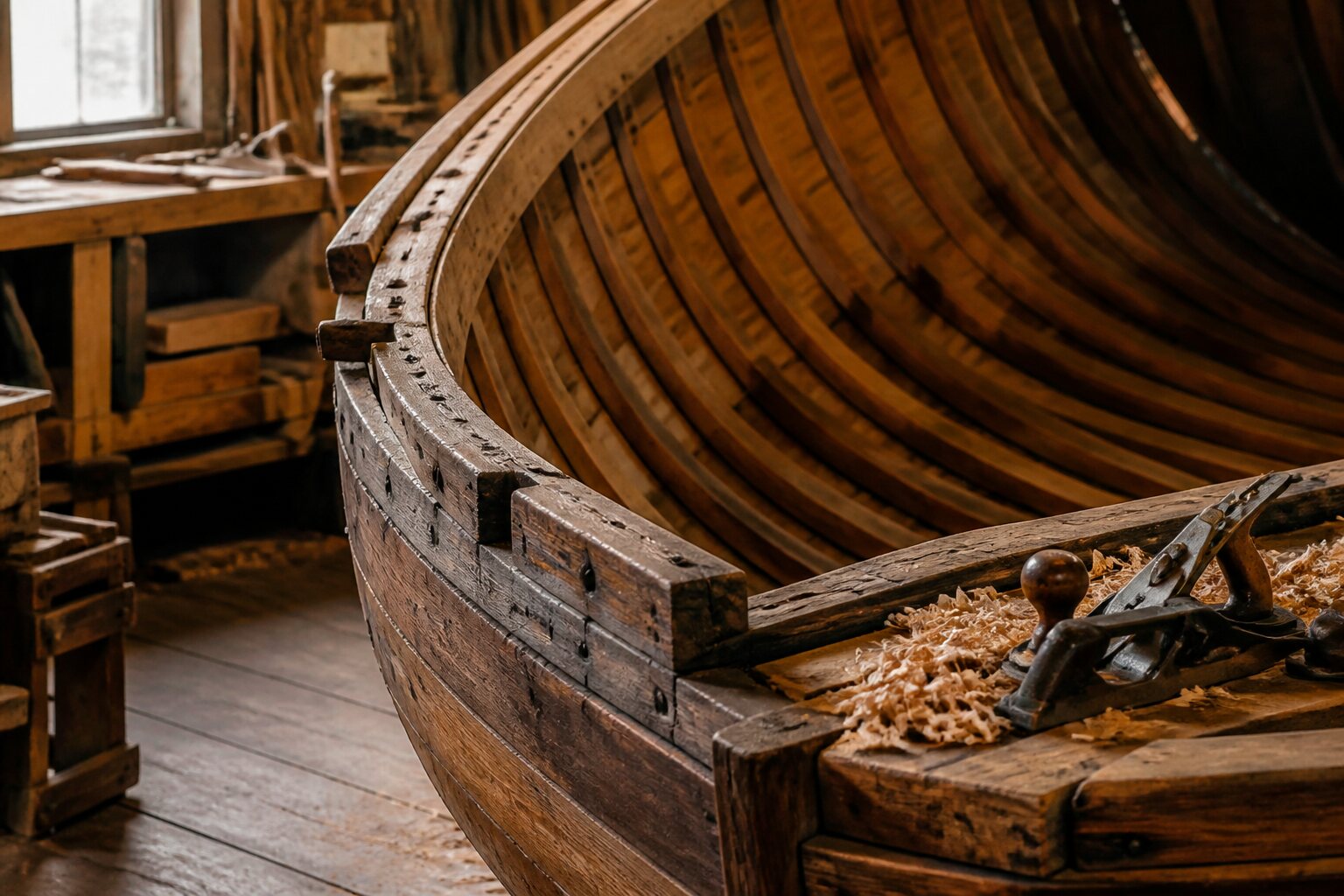
Material and mission
A minesweeper works close to a threat whose triggering systems can depend on magnetic or acoustic signatures. A wooden hull was one part of a broader effort to reduce unwanted interaction with mines. It did not make the vessel invisible or remove every hazard.
The hull is only one decision
Sweeping gear, electrical systems, crew procedure and the surrounding force all mattered. Explaining the ship through one material alone produces a tidy story but a poor history. The useful question is how several compromises made the mission possible.
Context without borrowed prose
The former site linked this subject to a wider minesweeper tradition. This page rebuilds that context from official historical material rather than reproducing archived copy, keeping the old path while giving the reader a new evidence trail.
Reduce a signature, not every danger
Magnetic influence mines made a ship's magnetic signature an operational concern. Wood offered a practical way to reduce the ferrous mass of the hull, which is why the material appears repeatedly in twentieth-century minesweeper design. That advantage did not make a vessel nonmagnetic: engines, fasteners, cables, tools and other equipment still had to be considered as parts of the system.
Acoustic and contact threats also remained. A wooden hull could not silence machinery, prevent a physical strike or remove the need for disciplined handling. The historical value of the material choice lies in the compromise it represents. Designers reduced one important source of risk while accepting the maintenance, strength and space constraints of a small working ship.
Wood changed maintenance as well as construction
A wood hull is vulnerable to moisture, impact, fastener problems and biological deterioration in ways that demand regular inspection. Its planking and framing form a structure, not a decorative skin. Any account of longevity must therefore look beyond the launch photograph and ask how the vessel was kept dry, repaired and monitored during service.
The material also shaped what could be altered. Equipment foundations, penetrations and weight distribution had to work with the existing structure. A later photograph may show an added fitting, but the image alone cannot explain how it was supported below deck. Plans, repair specifications and shipyard records are the records that can carry that conclusion.
Place Phoebe inside the wider design problem
Phoebe's official dimensions and mine-warfare assignment make the material question concrete. The vessel was small enough for coastal work yet had to carry a crew and specialized gear across long western Pacific routes. Wood was one decision within that balance, alongside draft, speed, machinery, electrical practice and deck arrangement.
The preserved historical path referred to the first wooden-hulled minesweepers, a subject broader than one ship. This reconstruction keeps that doorway but avoids claiming that Phoebe inaugurated the concept. It explains why the choice endured and then returns readers to the records that are specific to MSC-199.
Research worksheet
Put this method to work
A material-history note should distinguish the design rationale from the condition of a particular hull. General mine-warfare history can explain why reduced magnetic influence mattered. It cannot establish the timber species, fastening pattern, repair history or measured signature of Phoebe without ship-specific records. Labeling those levels makes the article useful to model makers and maritime readers while preventing a broad technical principle from becoming an invented construction specification.
Continue the research
Follow the evidence into the next question
Follow the material choice into the design tradeoffs of a compact coastal vessel.
The distinction between signatures becomes clearer in the naval mine types guide.
For mission terminology, compare sweeping and minehunting rather than treating them as synonyms.
Open the ironwork of the capital district route.