 16
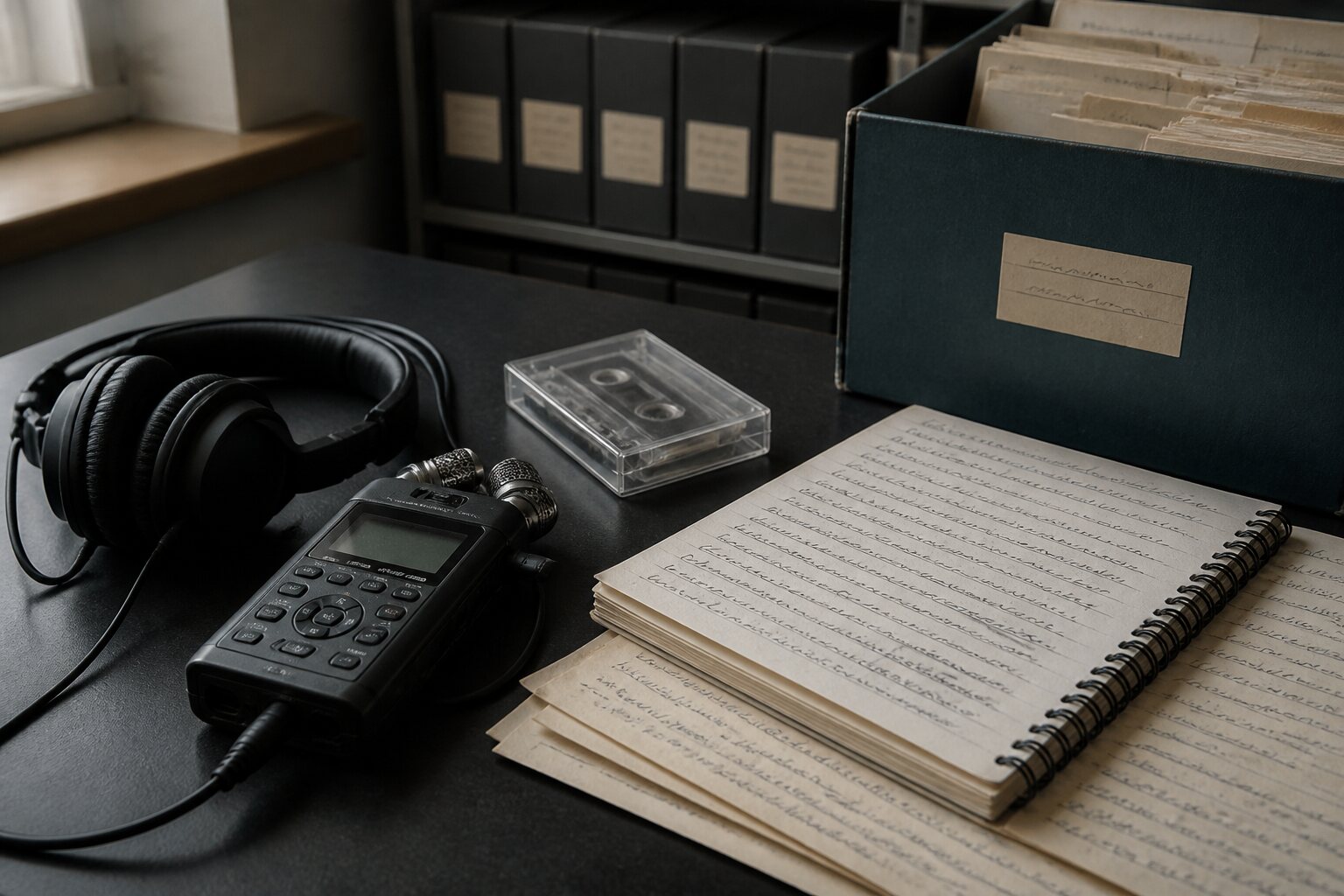
16How to evaluate oral history sources
A practical source-criticism checklist for interviews, recollections and family recordings.
Reader route / Research & Archives
Research & Archives turns a reader’s first question into a repeatable path through deck logs, muster rolls, photographs, oral history and the shared glossary. It is a practical home for archive tools, museum records, family research and source criticism.
 16
16A practical source-criticism checklist for interviews, recollections and family recordings.
 23
23A compact vocabulary for reading ship histories, mine-warfare records and catalog descriptions.
 24
24A practical route from a catalog entry to a dated observation, with precision matched to the record.
 25
25What muster rolls can show about assignment and continuity, and why they should not become public contact lists.
 26
26A source trail for catalog numbers, captions, owners and the permissions that make an image publishable.
 28
28A field guide to wild buckwheat (Eriogonum): how it differs from grain buckwheat, how to identify it on a hike, and which species to plant first in a dry
 31
31A record-first look at forge technique, tools, and the iron still standing in New York's Capital District, from Burden Iron Works to Monitor plate.
 32
32A record-first look at writing and illustrating children's books in North and South Carolina, from manuscript formatting to regional critique groups.
 35
35A record-based look at the Latin Monetary Union, its 1865 convention, its silver and gold coin standards, and how collectors read the coins today.
A living route
Each page names its source trail and points toward the next record. The route grows when a new document, correction or useful explanation earns a place.
Visit the Research Desk ↗