People & Heritage / source-led essay
Local History Museums and Denton County Records
A guide to using local history museums for family research, with Denton County, Texas as the working example and the records that answer real questions.
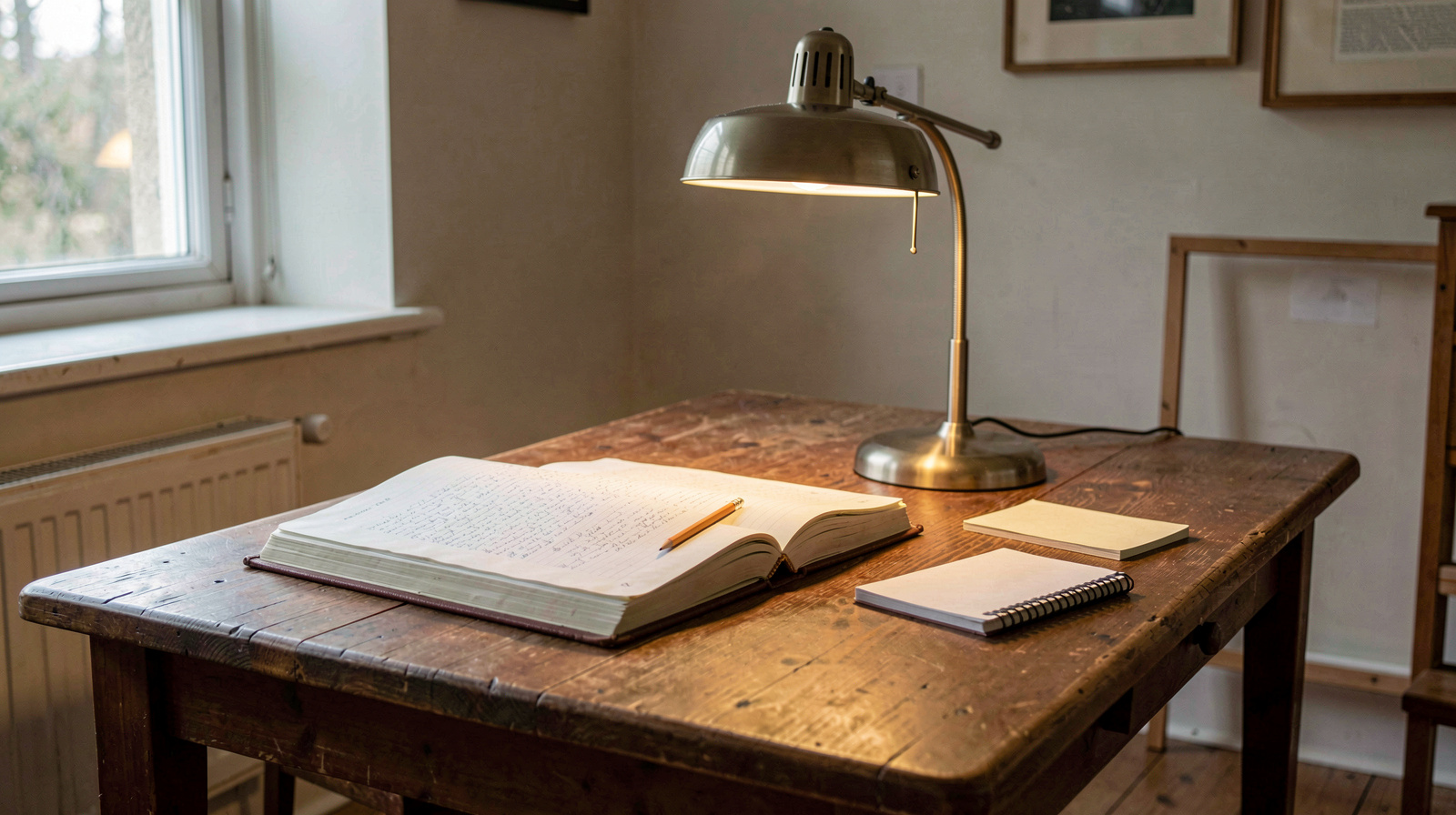
A local history museum is useful to a researcher when it holds original records, not just display cases. The Denton County Historical Museum in Texas keeps collections that document settlement, county organisation, railroads, cotton farming and town growth, and its published material explains how to read those holdings. Start with what the museum catalogues, then work outward to the courthouse, the cemetery and the census.
What does a local history museum actually hold?
Most county museums begin with donated family papers. A ledger, a quilt, a framed photograph and a few boxes of correspondence arrive together, and the staff record who gave them and when. That accession record is the first thing to ask for, because it tells you whether the item came from the family that created it or from a dealer who bought it at an estate sale.
The Denton County Historical Museum describes its collections as modest from the doorway: a few cases, a wall of framed photographs, a shelf of ledgers. Modest does not mean thin. A single bound deed volume or a store ledger can name hundreds of people who never appear in a printed county history.
Ask three questions at the front desk. What is catalogued and searchable? What is stored but not yet described? What is on loan and therefore not available to you? The answers decide how much time to spend in the reading room and how much to spend elsewhere.
How do you read an exhibit as evidence?
An exhibit is an argument made with objects. The label tells you what the curator believes the object proves, and the object itself may support a narrower claim.
Work through the layers. Identify the object type first: a photograph, a document, a tool, a textile. Then find the date range the museum assigns and check whether that date comes from the object or from family tradition. A quilt dated by fabric pattern carries a different weight than a quilt dated by a stitched inscription.
Photographs deserve separate treatment. A framed image with no caption is a portrait of unknown people in unknown places. The frame, the mount and the photographer's stamp often carry more dating information than the image itself. Compare the stamp against a list of known studios working in the county in that decade.
Finally, note what the exhibit leaves out. A display about cotton years that shows no tenant farmer housing is telling you something about the surviving collections, not about the county.
Which records answer family questions in Denton County?
Four record groups carry most of the load for family historians working in North Texas.
Deeds and probate files sit in the county clerk's office. The courthouse square in Denton has processed land transactions for well over a century, and each one left a paper trail: a deed, a plat, an estate inventory, a guardianship bond. Probate packets are the richest single source, because an estate inventory lists household goods, livestock and land by name.
Census returns give you the household. Cemetery lists give you the dates. The two rarely agree. A federal census return may list a household under one spelling while the gravestone names the same people differently, and neither is necessarily wrong. Enumerators wrote what they heard, and stonecutters worked from what the family told them.
Local history reprints fill the gaps. A thin paperback county history, often sold at estate sales north of the square, can place a family in a township at a moment the official records miss. Judge a reprint by its footnotes, its index and whether it names its sources.
When did the key events in Denton County happen?
The record gives a sequence rather than a single founding moment. Families reached the Blackland Prairie before there was a county to live in. They cleared land, built cabins and waited for a government to catch up with them.
County organisation followed the settlers. Railroads arrived next and fixed the towns that survived. The cotton years reshaped the prairie economy and the labour system that supported it. Town growth came last, and it accelerated once the county sat on the northern edge of the Dallas and Fort Worth metroplex.
Treat any single date with care. A county organisation date, a first railroad date and a first courthouse date are three different events, and local histories often compress them into one sentence.
How do you judge a local history reprint?
A reprint is a copy of an older text, sometimes with a new introduction and sometimes without one. The reprint itself is not the problem. The problem is a reprint that drops the original footnotes.
Check four things. Does the reprint state which edition it reproduces? Does it keep the original pagination or renumber the pages? Does it include the index? Does the new introduction name the author of the introduction and that person's connection to the county?
If a reprint fails those checks, treat it as a starting point and verify every claim against a primary record. A published book is a finding aid, not a source.
What about boundaries, towns and roads?
Denton County sits in North Texas, on the northern edge of the Dallas and Fort Worth metroplex, and its shape has been redrawn more than once since the first surveyors ran their lines. Boundary changes matter because they move records. A family that stayed on the same farm can appear in two different counties across two censuses without ever moving.
Ask what the county looked like in the year you are researching, not what it looks like now. County histories, boundary maps and the state historical commission's resources all help here. The Handbook of Texas, maintained by the Texas State Historical Association, publishes county-level entries that summarise organisation dates and boundary changes.
Roads matter too. Before the railroads, a road determined which courthouse a family used, which mill they patronised and which church they attended. Trace the road, and the record trail usually follows.
Putting the pieces together
Build a timeline for the family and a separate timeline for the county. Where the two intersect, you usually find a document: a deed, a probate filing, a census entry, a gravestone.
Keep a research log. Note the repository, the collection name, the box or volume number and the date you looked. Museums reorganise their holdings, and a citation that names the collection survives a move better than one that names a shelf.
Finally, ask the museum what it wants. Many county museums accept scans of family photographs and documents they cannot store themselves. That exchange puts your material where the next researcher can find it, and it costs you nothing but a scanner and an afternoon.