Find the record series first
NARA’s research guides explain how deck logs are organized and where a researcher may find the relevant catalog item. A ship name alone is rarely enough. Add the date range, command or record group when the catalog allows it.
Transcribe what is actually there
Preserve the original date precision, abbreviations and page reference. If a line is difficult to read, mark it as uncertain rather than silently normalizing it into a clean sentence.
Turn an observation into a claim
A deck-log entry may support a place, weather note, watch change or movement. It does not automatically support a wider statement about the entire deployment. Cite the exact page and keep the conclusion proportionate.
Choose ship and month before opening pages
A deck-log search begins with the vessel's official name, hull designation and a bounded date range. Catalog descriptions may group logs by year or record series, while the scanned object is organized by month and day. Record the catalog identifier before downloading individual pages so the transcription can be traced back to its archival object.
Phoebe may appear under AMS-199 or MSC-199 depending on period and indexing. Search both designations and retain the label used by the catalog. A result for another vessel, division or class should remain a related lead until the ship identity is explicit.
The form changed across Phoebe's service
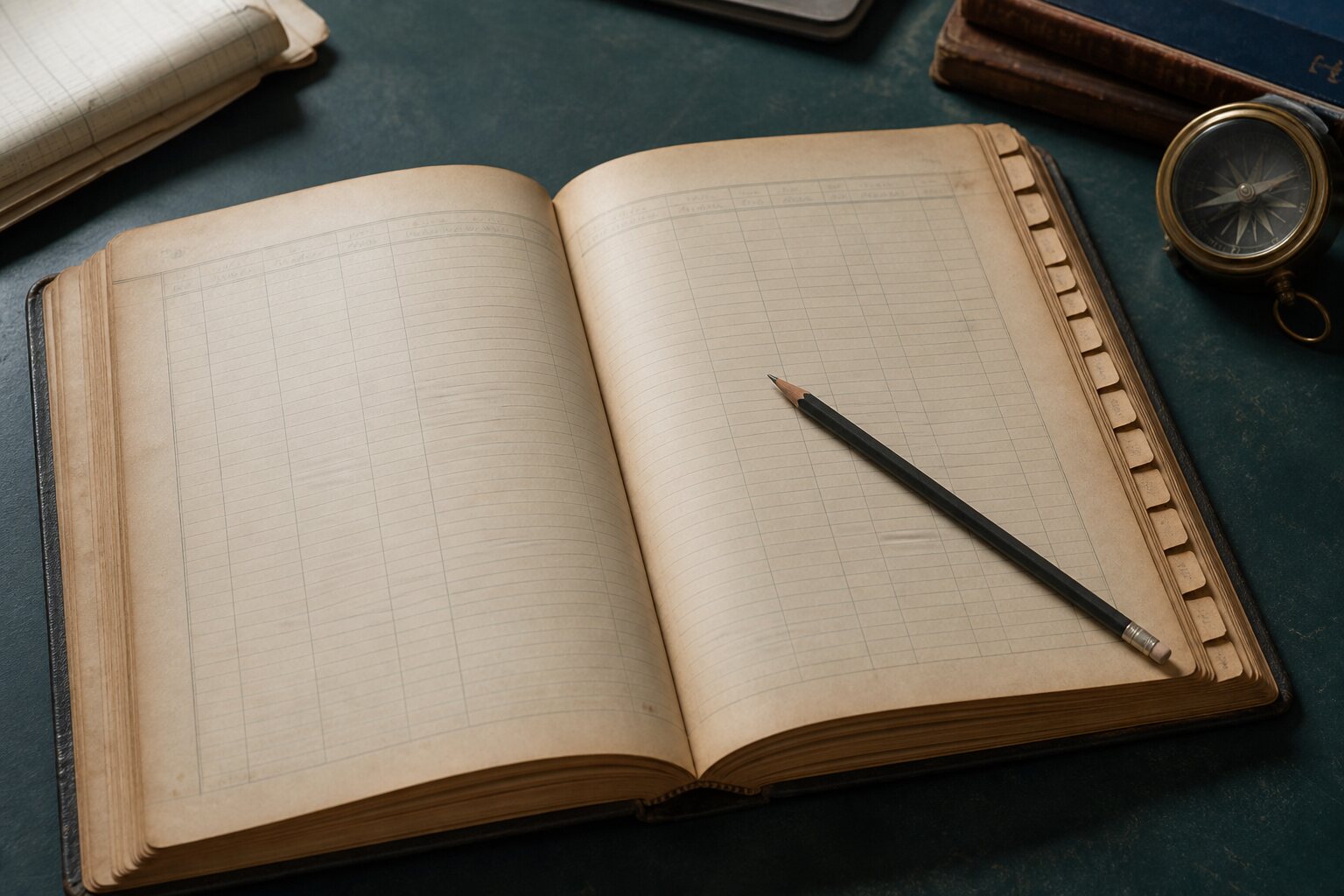
NARA describes a revised columnar format for 1960 through 1964 with fields for weather, latitude and longitude, miles traveled and fuel. In 1965 the form changed, and location fields were often incomplete. Researchers should not expect one extraction template to work uniformly across the decade.
The 1970s brought a six-column format with one line available for each entry, and monthly logs could run beyond 200 pages. Even within a format, handwriting, abbreviations and corrections vary. Capture the full page around an entry rather than preserving only a cropped sentence that removes watch and sequence context.
Cite the page and limit the conclusion
A useful transcription records date, watch, page, exact wording and uncertain characters. Add a separate normalized note for place names or modern spelling. This keeps search convenience from altering the source and gives another reader a route to inspect the handwriting.
An entry can support a movement, formal event, weather observation or routine activity at that moment. It rarely explains the full purpose of a deployment or the private experience of the crew. Pair it with command records or attributed recollection when those questions matter, and label the contribution of each source.
Research worksheet
Put this method to work
Create a transcription template before opening the first scan: catalog identifier, ship, month, image or page number, watch, exact text, uncertain characters, normalized place, claim supported and reviewer. The template slows the first entry and speeds every later one. It also separates transcription from interpretation, so a corrected place name does not overwrite the original handwriting and a map can use normalized data without pretending it came directly from the page.
Continue the research
Follow the evidence into the next question
Apply the format notes to the western Pacific route before plotting coordinates.
The watch context is explained in small-ship watchkeeping.
Use the service timeline to select the months most likely to answer a question.
Open the flower and involucre key route.
Open the five franc silver coin route.